Few debates ignite readers faster than a movie adaptation of a beloved novel. Someone always insists the original was better. Someone else argues the on-screen version captured something the page never could. Both reactions make sense. Turning a story from one medium to another changes it at a fundamental level. Pacing shifts. Tone shifts. Sometimes meaning shifts too. This article looks at why book comparisons with their film counterparts never really end, and what actually happens when a story moves from print to the screen. It also looks at where that shift tends to succeed, and where it usually breaks down.
Why Print and Screen Tell Stories So Differently
A novel gives readers direct access to a character's mind. Internal thought, memory, and doubt sit right on the page. A director has no equivalent shortcut. Thought must become behavior, expression, and dialogue instead, translated through a visual language built on gesture rather than sentence.
This difference explains most complaints about a weak on-screen version. When a screenwriter cannot find a visual substitute for interior monologue, something essential disappears. Readers notice immediately, even if they cannot always explain why the story feels thinner once it moves to a theater.
Pacing shifts dramatically too. A novel can spend fifty pages on a character's slow unraveling. A two-hour production rarely has that luxury. Writers must compress years of development into a handful of scenes, trusting a single glance or line to carry the weight of an entire chapter.
Structure changes as well. A novel can jump between timelines, narrators, or subplots with ease. A tighter script needs a clearer throughline instead. It must keep an audience oriented at every turn. This is not laziness. It reflects two genuinely different storytelling tools, and each one has strengths the other cannot fully replicate.
None of this means one format wins outright. It means comparing them fairly requires understanding what each medium can and cannot do. A great novel does not automatically produce great cinema, and strong visual storytelling does not require slavish devotion to its source material.
What Gets Lost and Gained: Dune and Harry Potter Compared
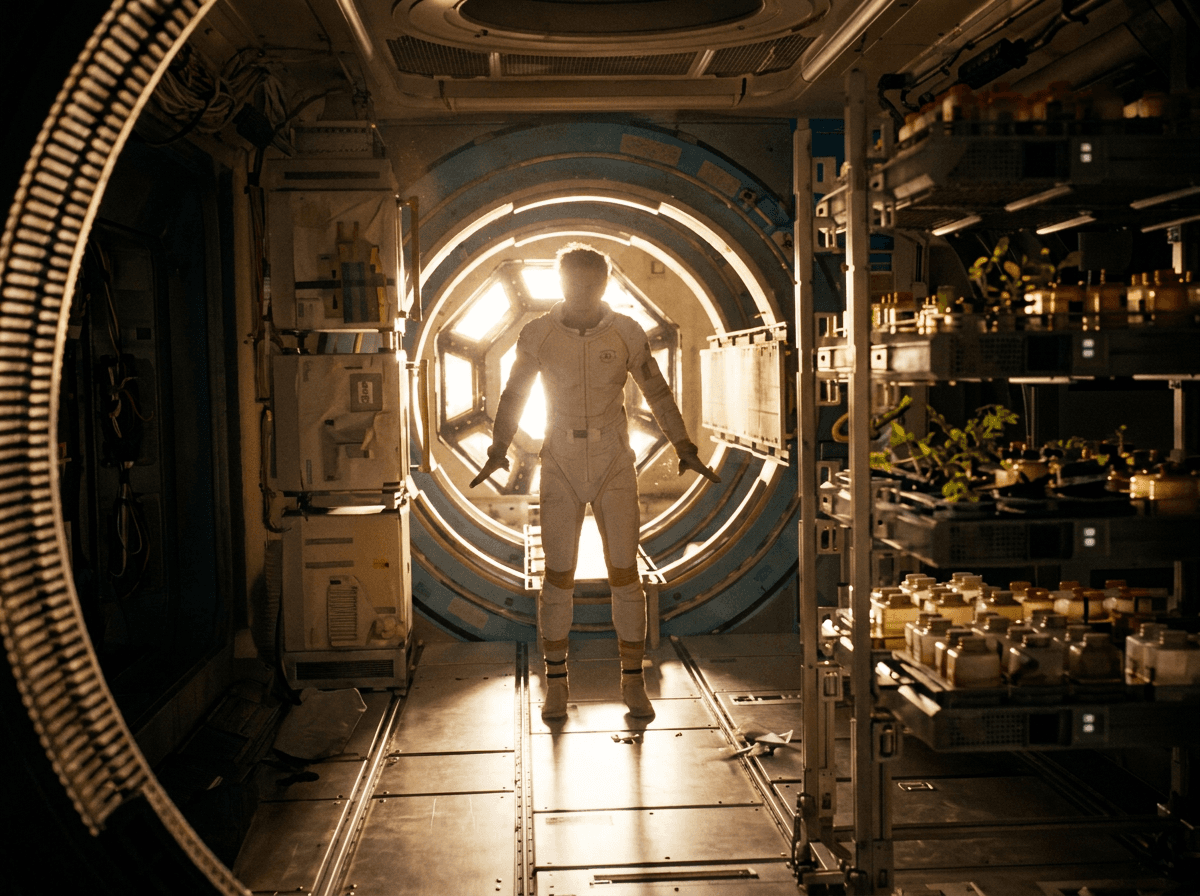
Frank Herbert's "Dune" leans almost entirely on internal monologue. Paul Atreides spends pages weighing prophecy, fear, and political strategy inside his own head. Denis Villeneuve's 2021 version strips nearly all of that away. Thought becomes silence, a held gaze, or a single line of dialogue instead. Something is lost in that trade. Yet this adaptation gains a visual grandeur the source material could only describe in words, turning Arrakis into an overwhelming physical presence rather than a mental image.
"Harry Potter" shows the opposite kind of trade-off. J.K. Rowling's later books, especially "The Order of the Phoenix" and "The Deathly Hallows," carry dense subplots involving house-elf politics, expanded backstory, and minor characters like Peeves. Most of that never reached the screen. The poltergeist Peeves disappeared entirely. Editors and writers trimmed these threads to protect pacing, and the result moved faster, even if devoted readers missed the texture those subplots provided.
Both examples reveal the same pattern. A screenplay cannot carry everything a novel holds, so choices must be made about what stays and what goes. "Dune" traded interior complexity for scale. "Harry Potter" traded subplot richness for momentum. Neither choice is wrong on its own. Each simply reflects what film, as a medium, can realistically sustain within a fixed runtime.
Composer contributions matter here too. John Williams' score gave Hogwarts an emotional identity long before dialogue explained anything, while Hans Zimmer's work on "Dune" turned Herbert's desert into something felt rather than just seen. Music often fills gaps that text alone created.
Casting Choices: Timothée Chalamet, Daniel Radcliffe, and the Debate Over Faces
Casting often decides whether audiences accept a new version at all. Readers build vivid mental images of characters, and no single actor can match every version imagined by millions of people at once.
Timothée Chalamet's casting as Paul Atreides drew early skepticism. Some fans doubted he carried the physical presence Herbert described. His performance largely won that argument, leaning into quiet intensity rather than raw physicality, and showing how far a strong choice can travel from early doubt.
Daniel Radcliffe faced a different challenge. He was cast as an eleven-year-old and grew up on screen across eight films, aging alongside a global audience that grew up with him. Few readers imagined that particular face while reading the books, yet the role became inseparable from the character over a decade.
Supporting characters often lose depth in this process. Rowling gave the Weasley twins pages of mischief and backstory. The screen versions compressed both into quicker, punchier comic relief, sacrificing nuance that patient readers still miss.
Author reactions to these choices vary widely. Some, like Stephen King, have criticized how Hollywood handled their own work, including Stanley Kubrick's "The Shining." Rowling, by contrast, stayed closely involved in casting and script decisions throughout the Harry Potter franchise, helping preserve tone even as content was trimmed.
Ultimately, a character's success on screen depends less on matching the page exactly and more on internal consistency. Audiences forgive a different face when that character still behaves logically within the world built around them.
Hollywood's Track Record: Hits and Misses
Hollywood has produced plenty of screen versions that outperform their source in cultural impact. "The Godfather" arguably surpassed Mario Puzo's novel in reputation, largely due to Francis Ford Coppola's disciplined direction and iconic performances that gave the story a weight the text only hinted at.
Other examples fare worse. Many readers still consider certain fantasy and science-fiction projects disappointing, criticizing rushed pacing or shallow character work compared to dense source material. These failures typically share a pattern: creators try to cram too much plot into too little runtime, sacrificing nuance for spectacle.
Streaming has changed this equation considerably. Limited series now let showrunners spread sprawling stories across eight or ten episodes. This format often serves complex source material better. It gives character arcs the room a traditional movie cannot provide. Quietly, it has become the preferred route for dense, multi-perspective narratives.
The success of any given project ultimately hinges on judgment rather than loyalty. A story adapted with care tends to satisfy both new audiences and longtime fans of the book. This holds true even when entire scenes look nothing like the original text, or when a film critic notes just how far the final cut has drifted from the page.
Conclusion
These page-to-screen debates will never fully resolve, because both formats operate under different rules. A novel can dive deep into thought and memory. A screen story must show, not tell, using image and sound to build the same emotional weight.
Neither approach is inherently superior, and insisting otherwise misses how differently each medium works. The strongest projects respect the spirit of their source while embracing what only cinema can achieve. The next time a favorite novel reaches theaters, the real question is not whether it matches the page exactly, but whether it finds its own honest way to tell the same story. Judged on those terms, far more of these projects succeed than the loudest online complaints ever suggest.